For years, SEO meant one thing: ranking on Google. That is changing fast. AI engines like ChatGPT, Perplexity, Google AI Overviews, and Claude are becoming the first place many people go with a question, and they often answer without sending anyone to a website. If your brand is not visible inside those answers, you are invisible at the moment a customer is deciding. Traditional SEO is still the foundation, but it is no longer the whole game. Here is how I think about the new SEO framework, as nine connected layers of visibility.
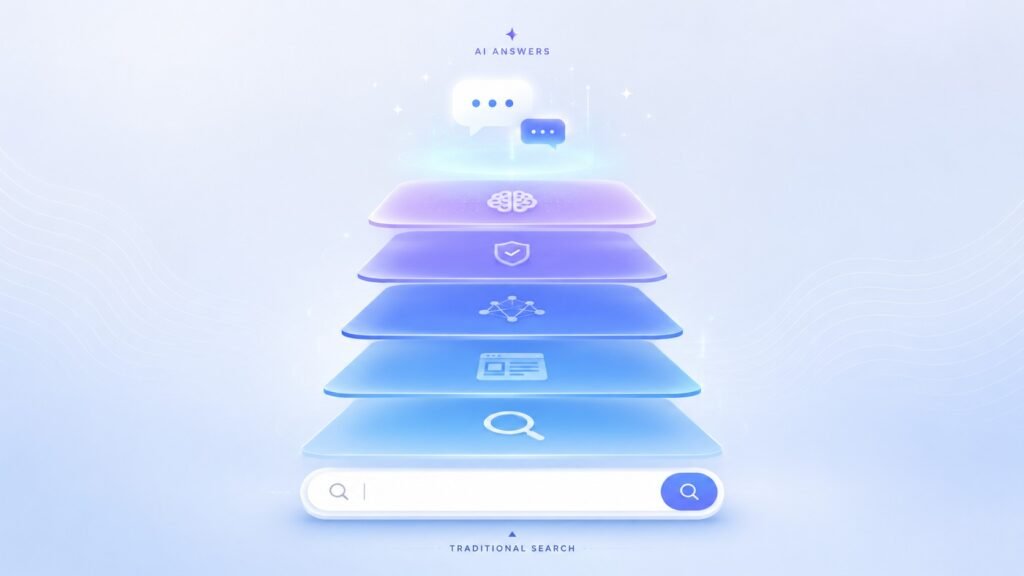
First, Traditional SEO. Keywords, backlinks, on-page work, and technical health. This is still the base. Clean structure, fast pages, and useful content are what everything else is built on.
Second, AI Search Optimization. Search engines now answer questions directly with AI summaries. The goal is to map the real questions people ask and structure your content so it can be pulled into those summaries and cited, instead of buried on page two.
Third, Paid Search Visibility. Google Ads and YouTube Ads still buy you attention. It works, but it is rented. The moment you stop paying, the visibility disappears, so it should support your organic work, not replace it.
Fourth, LLM Answer SEO. This is about being the source that ChatGPT, Perplexity, and Claude retrieve, trust, and quote. Clear, factual, well structured content that answers a question directly is far easier for a model to lift into an answer than a long, vague page.
Fifth, Authority SEO. AI systems and search engines both lean on trust. What third party sites, reviews, and credible sources say about you shapes whether you get surfaced at all. Your own pages matter, but so do the mentions you earn everywhere else.
Sixth, Community SEO. Reddit, Quora, forums, and professional communities are where people ask real questions, and they are also where AI engines gather answers. Being genuinely helpful in those spaces shapes the context an AI later repeats about your category.
Seventh, Parasite SEO. Publishing on platforms that already carry authority, like Medium, LinkedIn articles, or Substack, lets you place content where AI engines already read and reference.
Eighth, Platform SEO. Amazon, App Stores, YouTube, Instagram, TikTok, and LinkedIn each run their own search and their own algorithm. Being found is not only about Google anymore. It is about showing up inside every ecosystem your audience actually uses.
Ninth, Visibility Engineering. The top layer ties it all together. In an AI first world, visibility is not something you earn once and wait on. It is something you design across every channel, so the answers and context about your brand are shaped on purpose.
Here is the part the diagram does not tell you. You do not need to do all nine at once, and most small teams should not try. I start with the foundation, make sure the site is technically clean and genuinely answers the questions customers ask, then I test how the brand already shows up inside tools like ChatGPT and Google AI Overviews. That single check often reveals more than a month of keyword reports, because it shows you what the AI already believes about you.
The old question was how to rank on Google. The new question is this: when someone asks an AI about your category, do you show up in the answer, and can you trust what it says. Brands that start engineering for that now will own the first touchpoint while everyone else keeps optimizing for a results page fewer people read.